Designing a Behaviourally Informed HelloFresh Experience
Consumer behaviour and product strategy project applying behavioural science to reduce meal-planning friction and increase engagement with the HelloFresh app.
Context
This project was completed as part of a Consumer Behaviour course in a seven-person team. We developed a consumer-focused strategy for HelloFresh, a meal-kit service associated with convenience, freshness and healthy eating.
Problem
Although HelloFresh was perceived as highly convenient, it was also seen as relatively expensive. The challenge was to strengthen the value of convenience, improve engagement with the app and website, and encourage consumers to make more sustainable choices.
Approach
We analysed HelloFresh's brand associations, competitive positioning, consumer needs and existing use of behavioural principles. We created an association map and perceptual map, reviewed the website and pricing structure, and applied concepts such as loss aversion, social proof, default effects, sensory marketing and the IKEA effect. We then designed a new app feature, communication strategy and phased implementation plan.
Results & insights
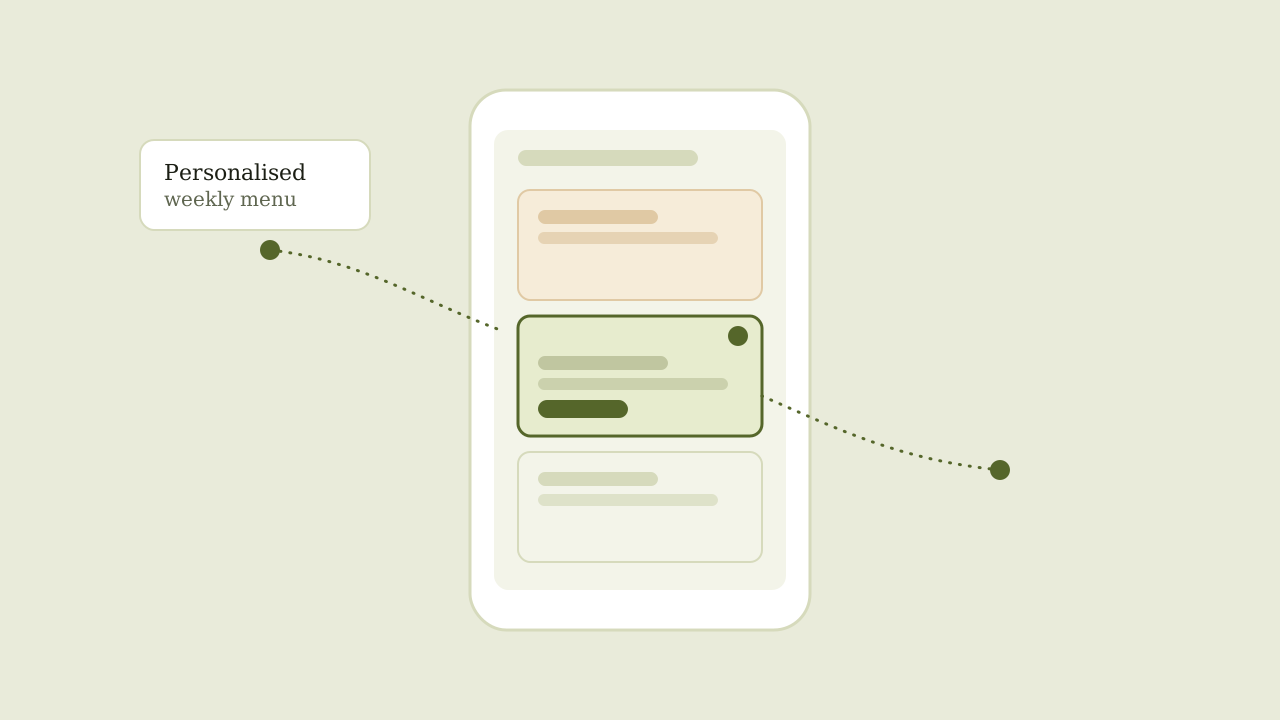
We proposed an Add Weekly Menu feature that recommends personalised meal plans based on previous purchases. A plant-based menu would appear as the default option, supported by social-norm messages showing how many other customers selected it and the emissions they saved.
We also recommended reframing website messages around avoided losses, redesigning pricing options using social proof and the decoy effect, launching the feature through exclusive early access, referrals and influencer marketing, and introducing a tiered loyalty programme. Together, these recommendations aimed to increase app engagement, support sustainable choices, attract new users and strengthen long-term customer loyalty.