Repositioning De Bijenkorf for Gen Z
Strategy case competition exploring how De Bijenkorf can stay relevant to Gen Z while protecting its premium brand positioning.
Context
This project was developed for a case competition organised by the Amsterdam Consultancy Group. I joined with my team, and we were asked to develop a strategic proposal for De Bijenkorf, a premium Dutch department store known for curated luxury, elevated service and distinctive in-store experiences.
Problem
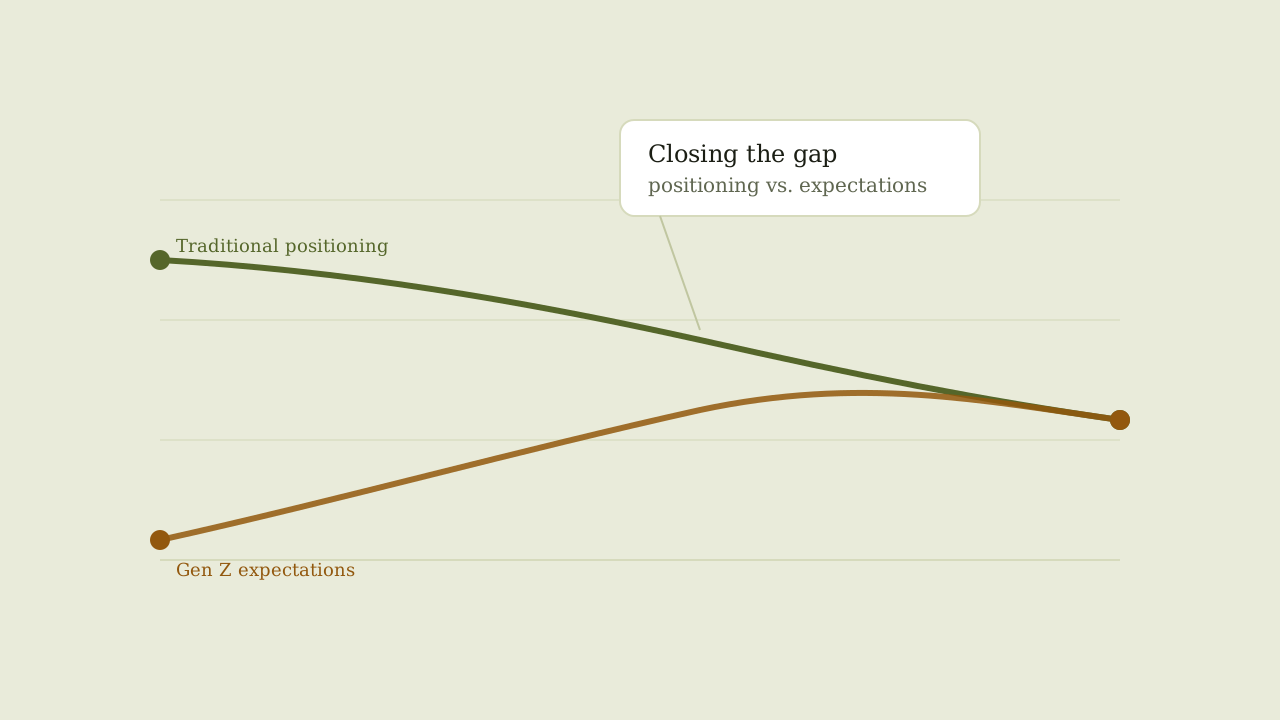
The project focused on a growing mismatch between De Bijenkorf's traditional premium positioning and the expectations of Gen Z. This created a risk that the brand could lose relevance among younger consumers while competitors adapted more quickly to changing preferences.
Approach
In a three-person case competition team, we analysed customer reviews, Gen Z consumer trends, online-shopping behaviour and developments in second-hand fashion. We identified four priorities for younger consumers: sustainability, experiences, online identity and strong in-store experiences. We then translated these insights into strategic recommendations and assessed the potential risks and business impact.
Results & insights
We recommended repositioning De Bijenkorf around a more authentic and personalised premium experience. The strategy included expanding pre-loved and rental services, increasing the visibility of local brands, organising stores around themes rather than only brands, using digital clienteling to connect in-store and online behaviour, and offering more product customisation.
These changes could create new revenue streams, improve inventory monetisation and strengthen De Bijenkorf's appeal to Gen Z. At the same time, we identified risks such as brand dilution, customer confusion and greenwashing, and recommended testing changes in one location, applying strict curation standards and communicating sustainability efforts transparently.