Predicting Student Dropout
I conducted my MSc thesis with Abe Hofman and Annie Johansson at Prowise Learn, an online learning platform.
Context
I conducted my master’s thesis research with Abe Hofman and Annie Johansson at Prowise Learn, an online learning platform where children practise subjects such as maths, language, and English through engaging, adaptive activities. The platform adjusts exercises to each pupil’s level and enables teachers to monitor progress and identify areas where additional support may be needed.
Problem
Prowise Learn is used by primary school students. Although online learning offers several advantages, research shows mixed findings on whether it consistently improves learning outcomes. One possible explanation is student disengagement, which is also reflected in the high dropout rates observed in online learning environments.
Because the effectiveness of online learning depends on sustained participation, I investigated patterns of disengagement and examined which student and behavioural characteristics could predict dropout.
Approach
I analysed longitudinal behavioural data from 62,256 students across 1,251 schools and developed two complementary models.
- A logit leaf model segmented students into distinct profiles with different dropout probabilities, allowing for heterogeneity across groups.
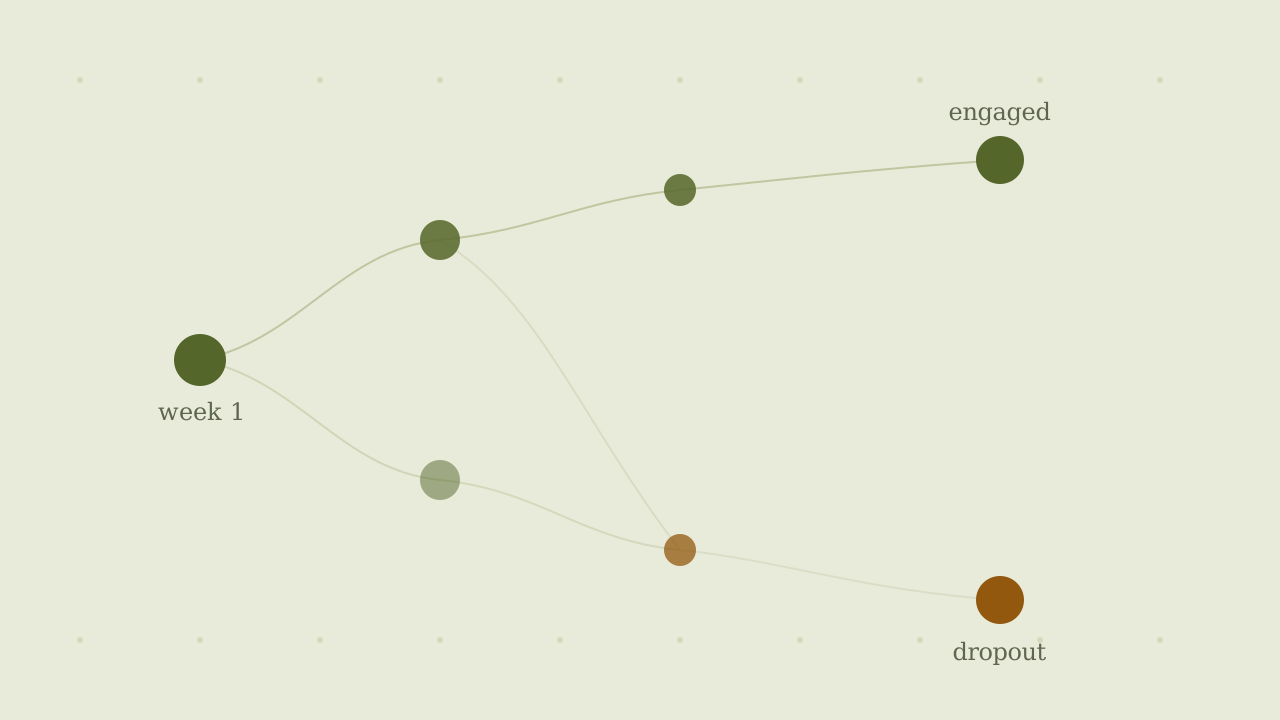
- A multi-state survival model examined transitions between active use, short-term quitting, and dropout. It also tested how these transitions were influenced by characteristics such as grade level, accuracy, and the proportion of incomplete games.
Results & Implications
The findings showed that quitting an individual game is distinct from quitting the platform entirely.
The logit leaf model identified the highest-risk group as higher-grade students who completed fewer than 461 items, with an estimated dropout probability of 75%.
More broadly, students in higher grades were more likely to disengage, while changing the default difficulty setting was associated with stronger persistence and a lower risk of dropout.
Based on these findings, I recommended that online learning platforms:
- Distinguish between temporary, task-level quitting and broader platform disengagement when identifying at-risk students.
- Provide personalised prompts encouraging students to adjust the difficulty level.
- Use targeted incentives or age-appropriate features to maintain the engagement of higher-grade students.
- Use the identified student profiles to support earlier and more targeted interventions for groups with a higher dropout risk.